


How it works
How self-tests work, from the sample to the result
You take the sample yourself, read the result within minutes and know what to do next. This page explains how self-tests work at home, step by step.
The four steps
No appointment, no laboratory, no waiting for a letter
Every test follows the same four steps. The exact procedure for each test is in its instructions for use.

1
Choose your test and order
Choose by symptom or by name. Order before 12:00 on a working day and it is dispatched the same day, in discreet packaging with no product name on the outside. From then, standard delivery takes 3 to 4 working days and express 1 to 2.

2
Take the sample
Most tests need one drop of blood from the fingertip. Others use urine, stool or a throat swab. Everything you need is in the box except a timer.

3
Run the test
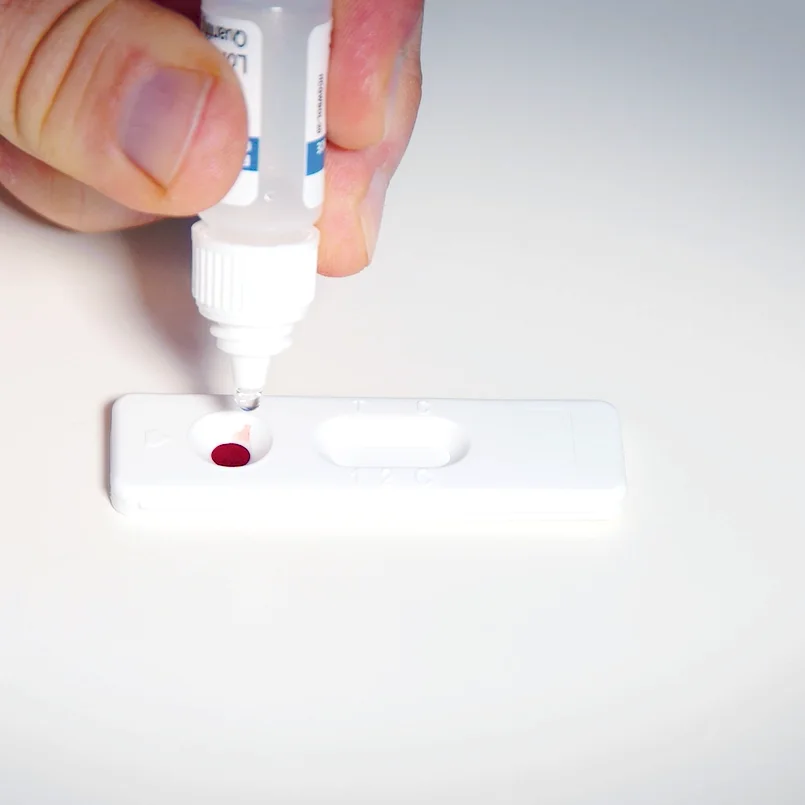
Add the sample to the test as the instructions show, then set a timer. Most tests are read after 10 minutes.

4
Read the result and act
Lines appear in the result window. The instructions and the product page show what they mean for that test, and when to see a doctor.
The sample
Four kinds of sample, all taken at home
Each test needs one kind of sample. The box contains everything for taking it.
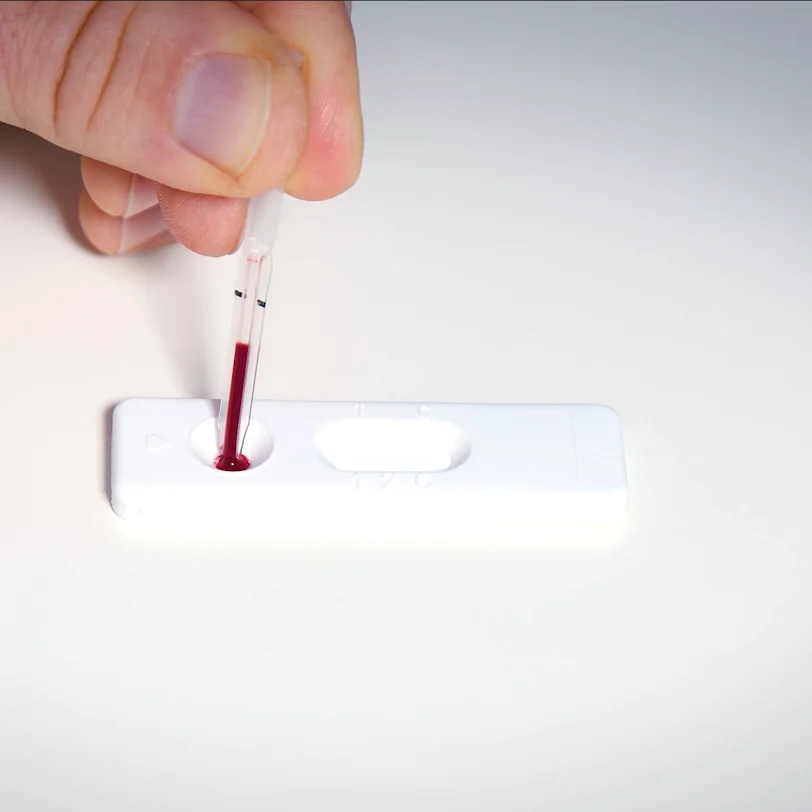
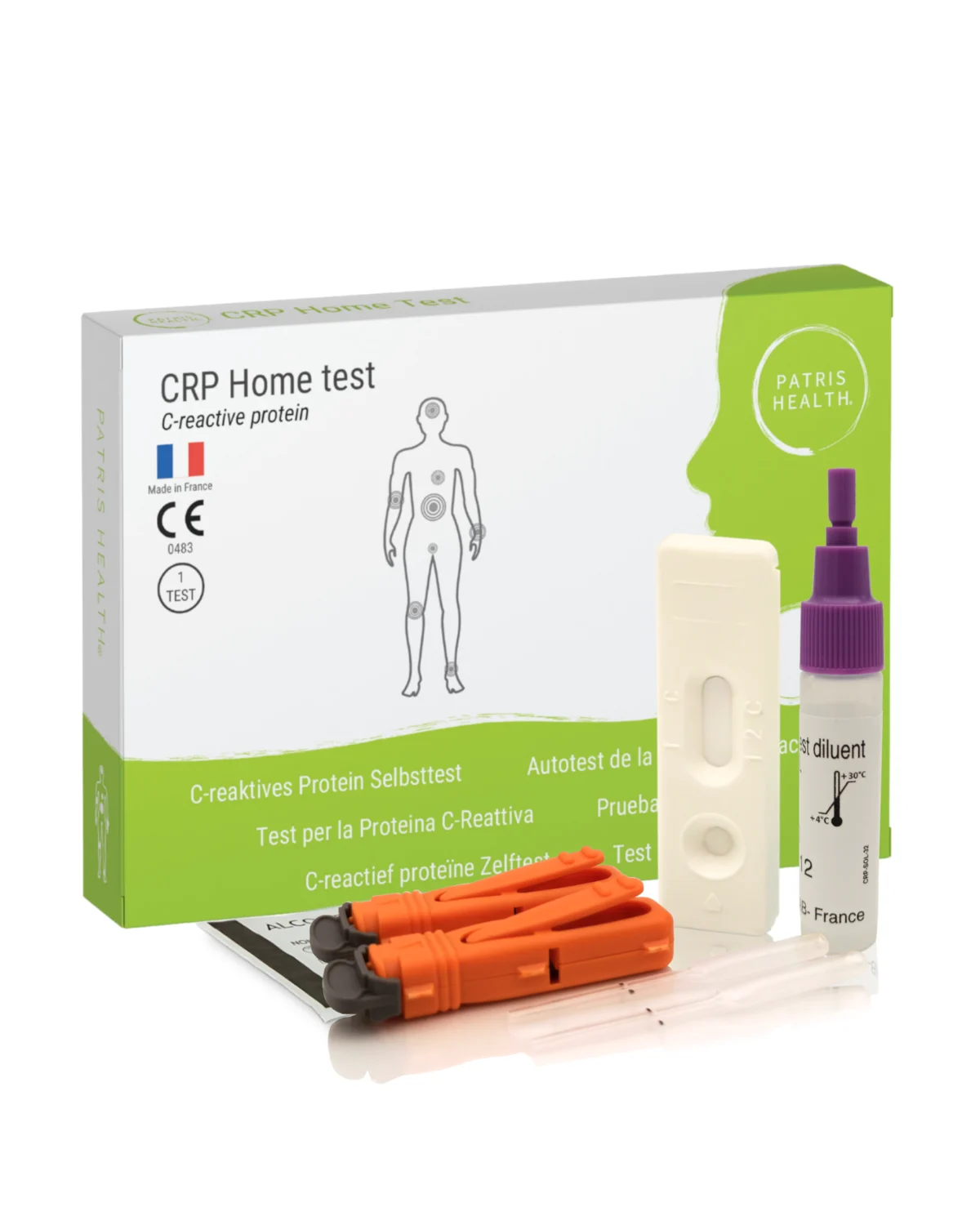
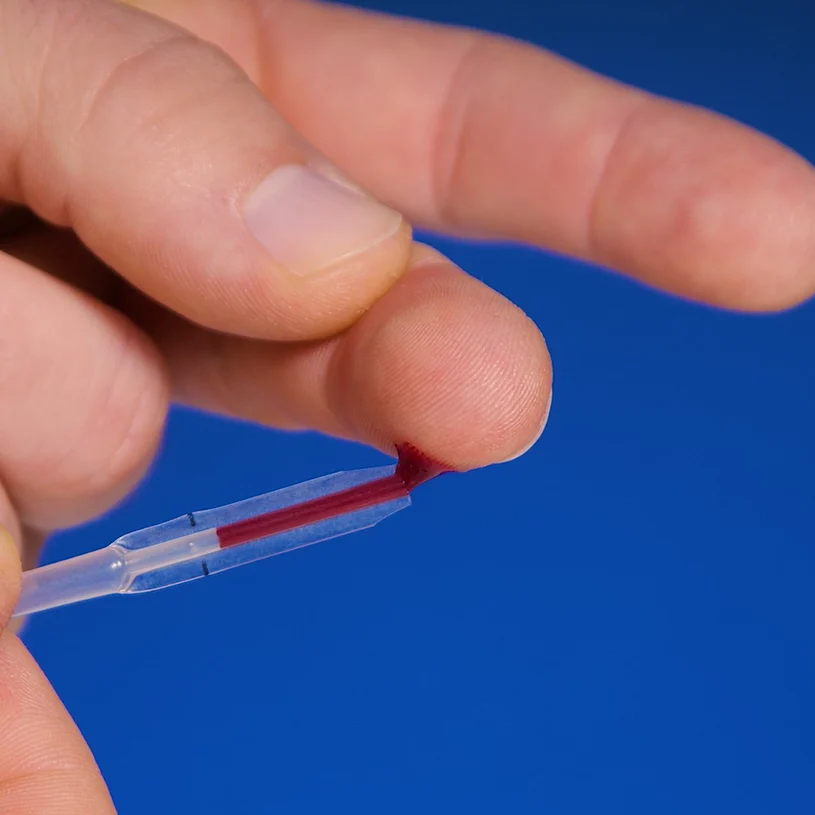
Fingertip blood
11 tests
One drop from the side of a fingertip, taken with the sterile lancet in the box. A second lancet and pipette are included as spares.
Iron Deficiency · Thyroid Function · CRP · Allergy · Coeliac Disease · H. pylori · Lyme Disease · Syphilis · PSA · Liver Function · Pregnancy
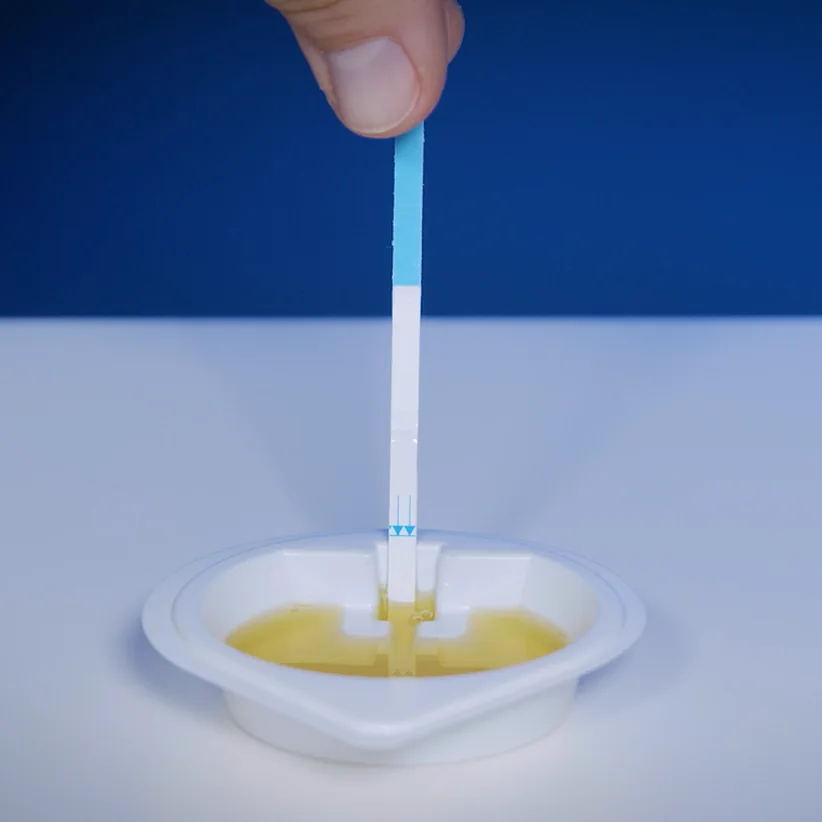
Urine
1 test
First-morning urine collected in the cup from the box. The test strip stands in it for 5 to 10 seconds.
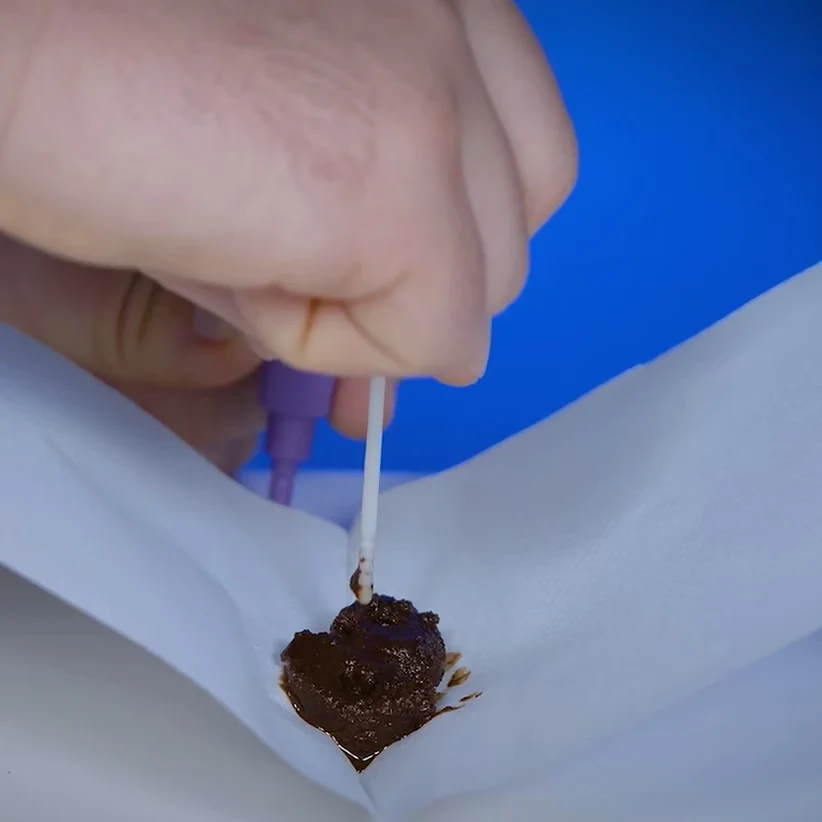
Stool
3 tests
A small sample taken with the collection stick, from a paper strip fixed across the toilet seat. Nothing is sent to a laboratory. The FIT test collects samples on three consecutive days.
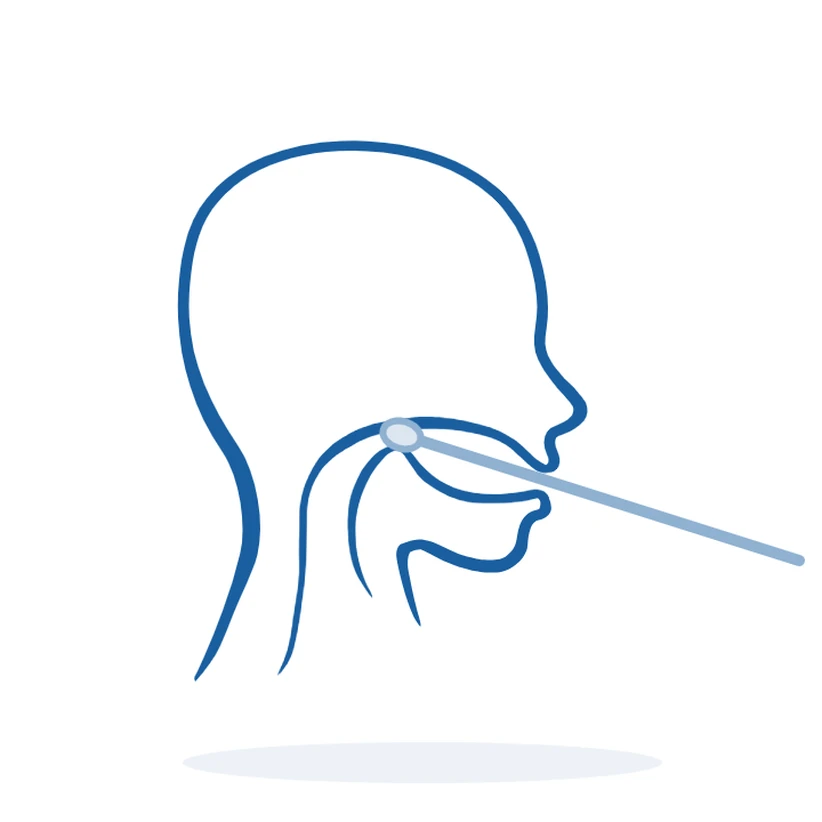
Throat swab
1 test
A swab from the back of the throat, taken in front of a mirror or by another person.
The result
How to read the result
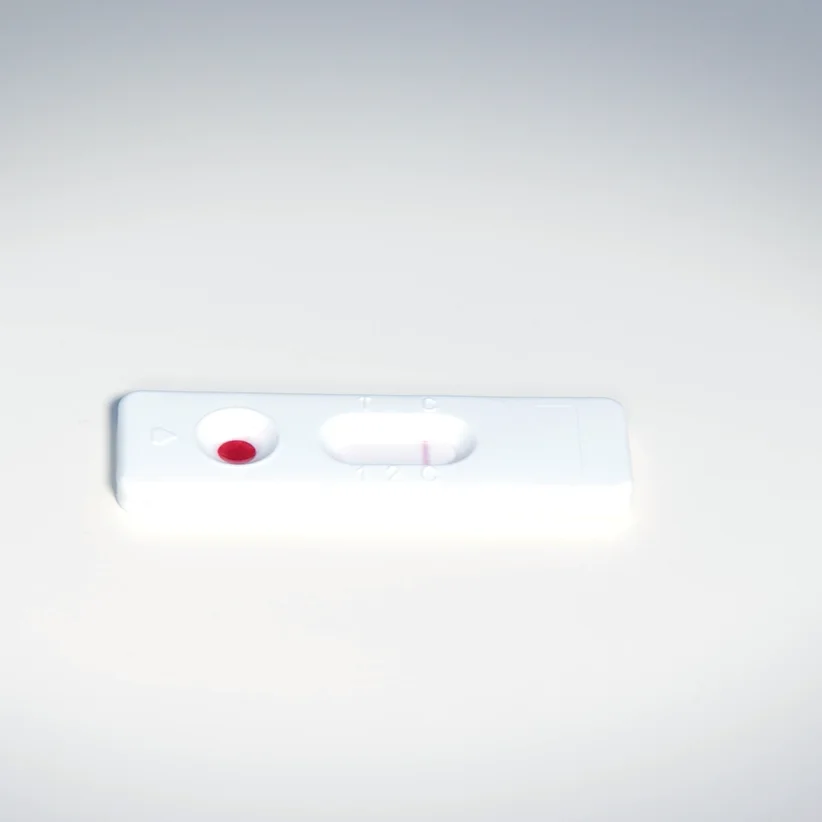
The result appears as coloured lines. C is the control line: it shows that the test has worked. T is the test line.
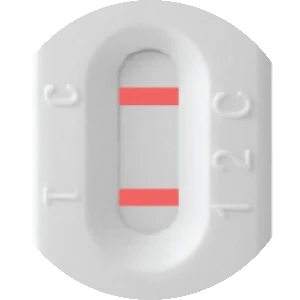
Two lines, C and T
On most tests this is a positive result: the marker the test looks for was found. See your doctor.
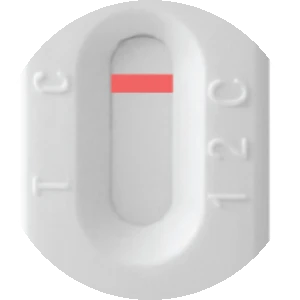
One line, at C
On most tests this is a negative result: the marker was not found, or was below the level the test detects.
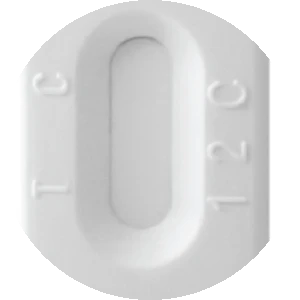
No line at C
The result is invalid, whatever else is showing. Repeat with a new test. The Patris Health promise covers it.
The pictures are for illustration purposes; the actual lines may differ in intensity.
The meaning of the lines depends on the test. Read the instructions for your test before you open the pouch. Five tests are read differently from the pattern shown here.
Tests that are read differently
- Iron DeficiencyReversed: one line at C means ferritin is low; two lines mean it is normal.
- Kidney FunctionThe strength of the two lines is compared. A test line paler than the control line is the positive result.
- CRPThe pattern of lines shows which of four ranges your CRP level is in.
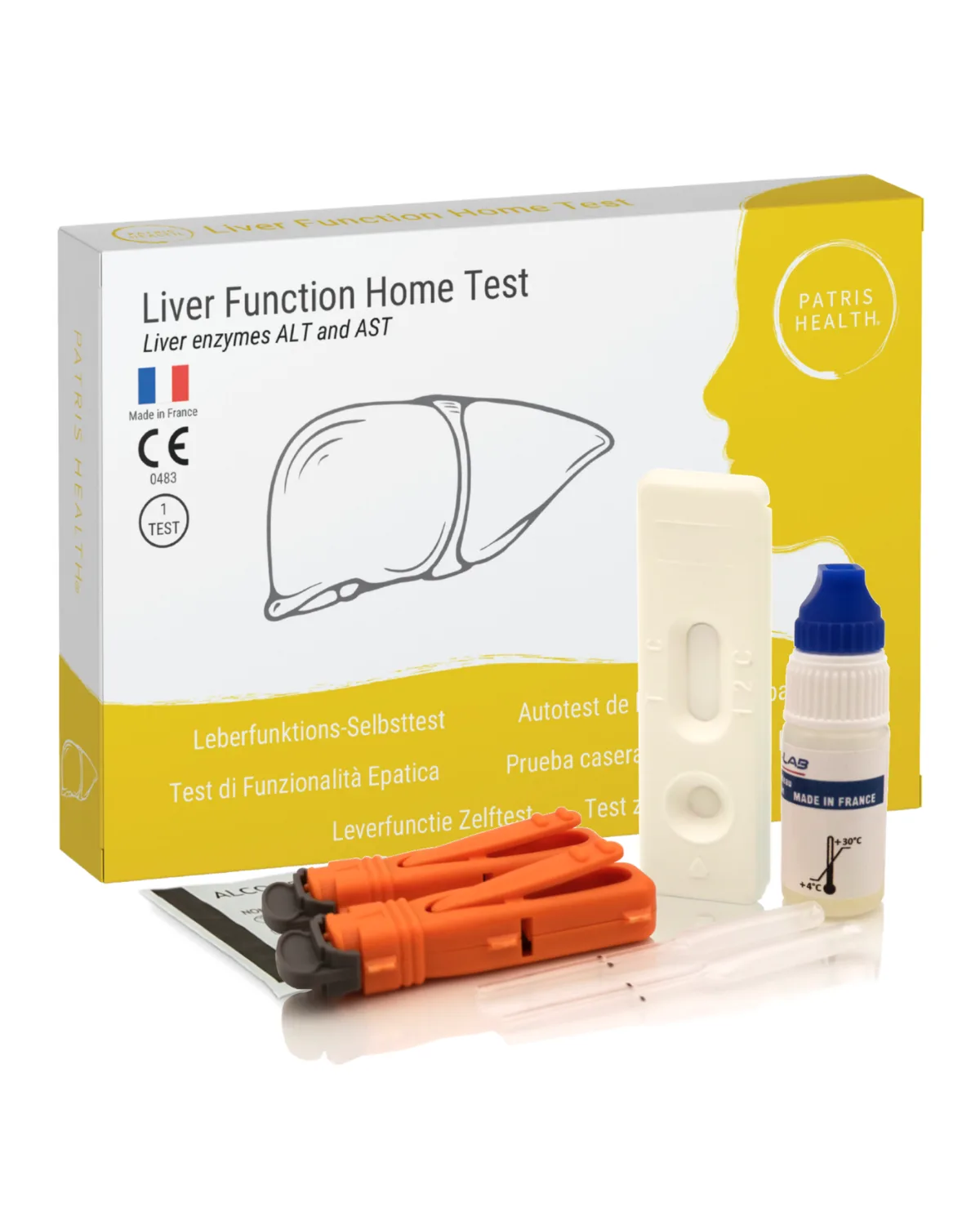
- Liver FunctionA blue control line, and up to two red lines: one for ALT and one for AST.
- Rotavirus & AdenovirusTwo result windows, one for each virus. Each is read separately.
A faint test line still counts as a line. On most tests the intensity of the colour does not matter. Read the result at the time the instructions give: for most tests after 10 minutes and not after 15.
What to expect
What a self-test tells you, and what it does not
It tells you
- Whether a marker is present in the sample, or above a set level
- From a sample you take yourself, the same day, at home
- Whether there is a concrete reason to see a doctor, with a result to show
It does not tell you
- An exact value. A laboratory measures that
- The cause of a result. That needs a doctor
- A diagnosis, or which treatment is needed. It is a screening test
When a self-test is not the right step
- Severe, sudden or rapidly worsening symptoms need a doctor or the emergency services, not a self-test.
- A negative result does not rule out an illness. If the symptoms continue, see your doctor.
- Do not start, change or stop a treatment because of a self-test result alone. Talk to your doctor first.
- Some tests are not suitable for young children. Each product page states the age limit.
Accuracy
The figures for each test
How often each test gave the same result as the laboratory reference method in its evaluation studies. The figures are those stated in the instructions for use of each test.
| Test | Sample | Result read after | Agreement with the laboratory method |
|---|---|---|---|
| Allergy | Fingertip blood | 10 minutes | 97.03 % |
| Coeliac Disease | Fingertip blood | 15 minutes | 96.7 % |
| CRP | Fingertip blood | 5 minutes | 99.15 % |
| H. pylori | Fingertip blood | 10 minutes | 93.48 % |
| Iron Deficiency | Fingertip blood | 10 minutes | 98 % |
| Liver Function | Fingertip blood | 10 minutes | 95.83 % |
| Lyme Disease | Fingertip blood | 10 minutes | 89.19 % |
| Pregnancy | Fingertip blood | 5 to 10 minutes | 100 % |
| PSA | Fingertip blood | 10 minutes | 97 % |
| Syphilis | Fingertip blood | 10 minutes | 97 % |
| Thyroid Function | Fingertip blood | 10 minutes | 99.2 % |
| Kidney Function | Urine | 5 to 10 minutes | 88.89 % |
| Calprotectin | Stool | 10 minutes | 95.4 % |
| FIT | Stool, on three days | 10 minutes | 93 % |
| Rotavirus & Adenovirus | Stool | 10 minutes | 97.48 % rotavirus, 100 % adenovirus |
| Strep A | Throat swab | 5 to 10 minutes | 96.4 % |
False positive and false negative results are possible with any screening test, which is why a doctor confirms the result. The time is counted from the moment the sample is on the test.
Before you start
Six things that give a valid result
Each one comes from the instructions for use.
Read the instructions first
Read them before you open the foil pouch. They are on every product page, so you can read them before you order.
On most blood tests: wait before adding the diluent
After the blood is in the sample well, wait 30 to 40 seconds until it is fully absorbed. Adding the diluent too early is the most common reason for an invalid result.
Use the exact amount
Fill the pipette to the line and add the exact number of drops. Too much or too little can make the result incorrect.
Set a timer
Read the result at the stated time and not later.
Check when not to test
Some circumstances affect the result: intense exercise or fever before the kidney test, menstruation during the FIT test, a gluten-free diet before the coeliac test. The instructions list them for each test.
Store the test correctly
Keep it between 4 and 30 °C and do not freeze it. Open the pouch only when you are ready to test. The expiry date is printed on the box.
Quality
Why you can rely on the result
Every test is a CE-marked in-vitro diagnostic medical device for self-testing. Most are of a type that professionals have used for more than ten years.
The Patris Health promise
No valid result? Write to us and we replace the test or refund the purchase price. It applies whenever the test was performed as the instructions describe. Unopened tests can be returned within 90 days.
Questions
Asked before the first test
Do I need a doctor or a laboratory to use a self-test?
No. You take the sample and read the result yourself. A positive result, or symptoms that continue, are a reason to see your doctor.
Will anyone see what I ordered?
The outer packaging carries no product name, no logo and no indication of the contents. The sender shows as PATRIS d.o.o.
Can I read the instructions before I buy?
Yes. Every product page has an “Instructions for use” button that opens the full instructions for that test.
What do I do if the result is positive?
See your doctor and show the result. Every product page explains what the result means, what it does not mean and what to do next.
Find your test
Start from what you are feeling
- Tired all the time, pale or short of breathIron, thyroid, inflammation
- Stomach pain, bloating or a change in bowel habitH. pylori, coeliac, calprotectin, FIT, rotavirus
- Sore throat and fever, or after a tick biteStrep A, Lyme, CRP
- Sneezing, itching or a rashAllergy
- After unprotected sexSyphilis
- Could I be pregnant, or are my periods changingPregnancy, thyroid
- Urinary, kidney or prostate concernsPSA, kidney, liver
Know what you are looking for? All self-tests, A to Z
Last reviewed 6 October 2026